
Our Mission
“Celebrating our diverse faiths and spiritual traditions, bringing people together to build understanding and serving our community.”
Who We Serve
We count as our constituents the 800 congregations in the City of San Francisco, their respective judicatories, sectarian educational and healthcare institutions, and the faith-based social service agencies that provide the social safety net for our most vulnerable residents.
Convening, Communicating and Advocacy
The San Francisco Interfaith Council (SFIC) convenes and amplifies the voice of our City’s faith-based community on such issues as homelessness, disaster preparedness response and recovery, civil and human rights, housing affordability, immigration and so much more.
Our Work
During this time of social change in San Francisco, civic leaders and the public view the SFIC as the “go-to” organization for mobilizing our City’s religious communities. Our diverse constituencies turn to us for resources, referral and representation. Our robust relationships and communications network of over 5,600 e-subscribers allow the SFIC to bring together and mobilize San Francisco’s faith-based community to create an effective, combined force for service and issues of public policy, so that we may accomplish together what no single faith entity can do alone.
Our Programs
Monthly Breakfasts
For over 18 years the SFIC has hosted a free public interfaith breakfast on the second Thursday of each month at St. Mark’s Lutheran Church in San Francisco where 100 congregational and lay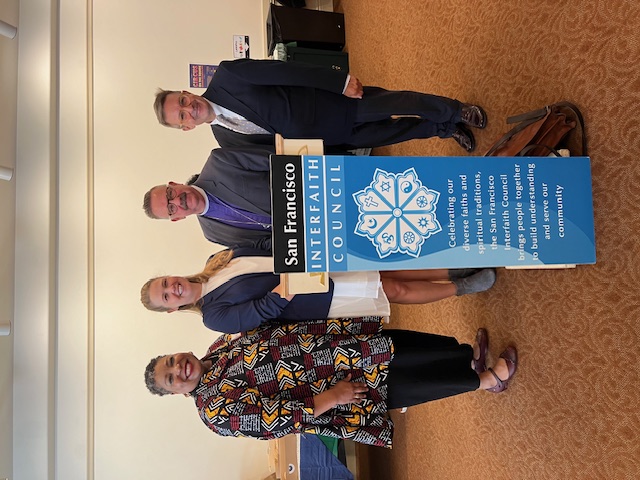 leaders network and share a meal. Speakers from a variety of City departments, civic agencies, NGOs and philanthropic programs discuss their important work, ask faith communities to help spread the word, and offer volunteer opportunities for congregants. An individual gives a “meditation” from his or her religious tradition, and another presents a personal “faith journey.” To appreciate the substantive presentations made we invite you to visit: Monthly Breakfasts
San Francisco Interfaith Winter Shelter
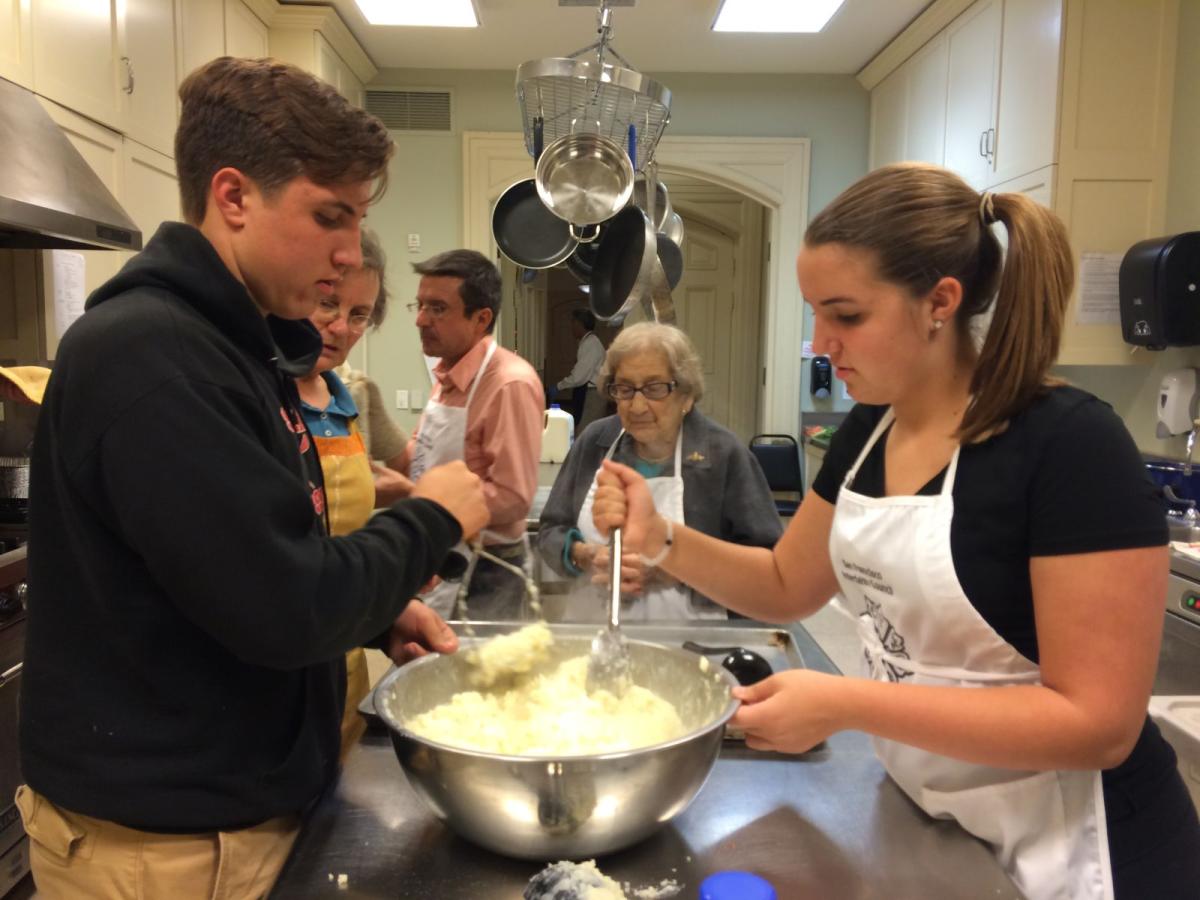 Entering our 38th year, the SFIC has sponsored and coordinated an Interfaith Winter Shelter for the homeless. This shelter provides a hot, nutritious dinner, breakfast and a safe, warm overnight rest for some 100 homeless guests every night from the Monday before Thanksgiving through the end of March. The SFIC coordinates four host-site congregations, 50 meal-providing congregations, shelter staff from Episcopal Community Services with input from the Department of Homelessness and Supportive Housing.
At the request of the Department of Homelessness and Supportive Housing the Interfaith Winter Shelter remained open through the end of March 2026. Extending the shelter is made possible, in large part, thanks to our partners at Episcopal Community Services and congregations who volunteer to prepare and serve meals.
The Interfaith Winter Shelter for the 2026-2027 season will commence on Monday, November 23, 2026, and conclude Monday morning, March 28, 2027.
Find additional information about the Interfaith Winter Shelter here. Find additional homeless resources here.
Disaster Preparedness, Response and Recovery
The 1989 invitation by humanitarian aid organization Church World Service to religious leaders to assist in distributing funds to San Franciscans displaced by the Loma Prieta Earthquake arguably gave birth to the San Francisco Interfaith Council. As there is an instinctive expectation by the broader community that houses of worship and religious institutions will step up in times of need, disaster preparedness, response, and recovery became a founding mission of the organization.
Following Hurricane Katrina, when many evacuees found their way to San Francisco, the SFIC, in collaboration with its partners in disaster preparedness, hosted biennial Disaster Preparedness Workshops for Congregations. These invaluable convenings spanned the spectrum of disaster possibilities: from earthquakes, fires, climate change, and security in houses of worship to cultivating closer interfaith relationships among houses of worship in our City's diverse neighborhoods.
Thanks to longstanding regional interfaith relationships, at the time of the devastating North Bay fires, the SFIC was instrumental in forging time-sensitive connections between the SF Department of Emergency Management and interfaith leaders in counties impacted by the fires, as well as where evacuees presented themselves. Working collaboratively with our broader cohort of Bay Area interfaith leaders, chaplains were dispatched to offer spiritual care to trauma-affected residents returning to their homes for the first time after being forced to evacuate.
The SFIC also convened Federal, State, and local law enforcement officials, as well as the SF Departments of Emergency Management and Public Health, along with Security Directors from the Jewish Community Federation and Catholic Archdiocese of San Francisco to address the timely issue of terrorist attacks at houses of worship. This effort culminated in a highly successful workshop, where over 350 congregation leaders and facilities managers received critical training in key security-related aspects, as well as counseling on how to effectively apply for federal and state grant funding to increase and enhance security for their sanctuaries and facilities. Shortly after that convening, a San Francisco-based Armenian church's historic community center was destroyed by arson. Days later, its parochial school was vandalized, traumatizing all sectors of that academic community. The relationships fostered, leading up to the Security in Houses of Worship convening, enabled the SFIC to make time-sensitive connections that allowed the Armenian community to effectively access needed resources and funding in their response to these devastating attacks.
COVID-19 Response
As the SFIC is the oldest, largest, and most important portal by which the City is able to access San Francisco's 800 communities of faith and religious institutions, it became the key point of contact for the duration of the COVID-19 pandemic. At the outset, it employed its vast communications network to dispatch credible and time-sensitive communications and health orders from the City's Department of Public Health, Department of Emergency Management, and Mayor's Office, to faith and lay leaders so that they, in turn, could develop plans to ensure the safety of the faithful entrusted to their care. Additionally, at the request and with the support of the aforementioned civic departments, the SFIC produced over 125 Online Briefings for Community & Faith Partners, engaging subject matter experts on the spectrum of COVID-related issues and how communities of faith and religious institutions could best access critical resources related to those issues.
The lessons learned from these disaster preparedness, response and recovery efforts have resulted in numerous invitations to high-level conferences and convenings, at which these success stories have been the featured theme.
Please visit: Disaster Preparedness Resources and Security Resources
Rev. Dr. Martin Luther King, Jr. Day Observance and Interfaith Service
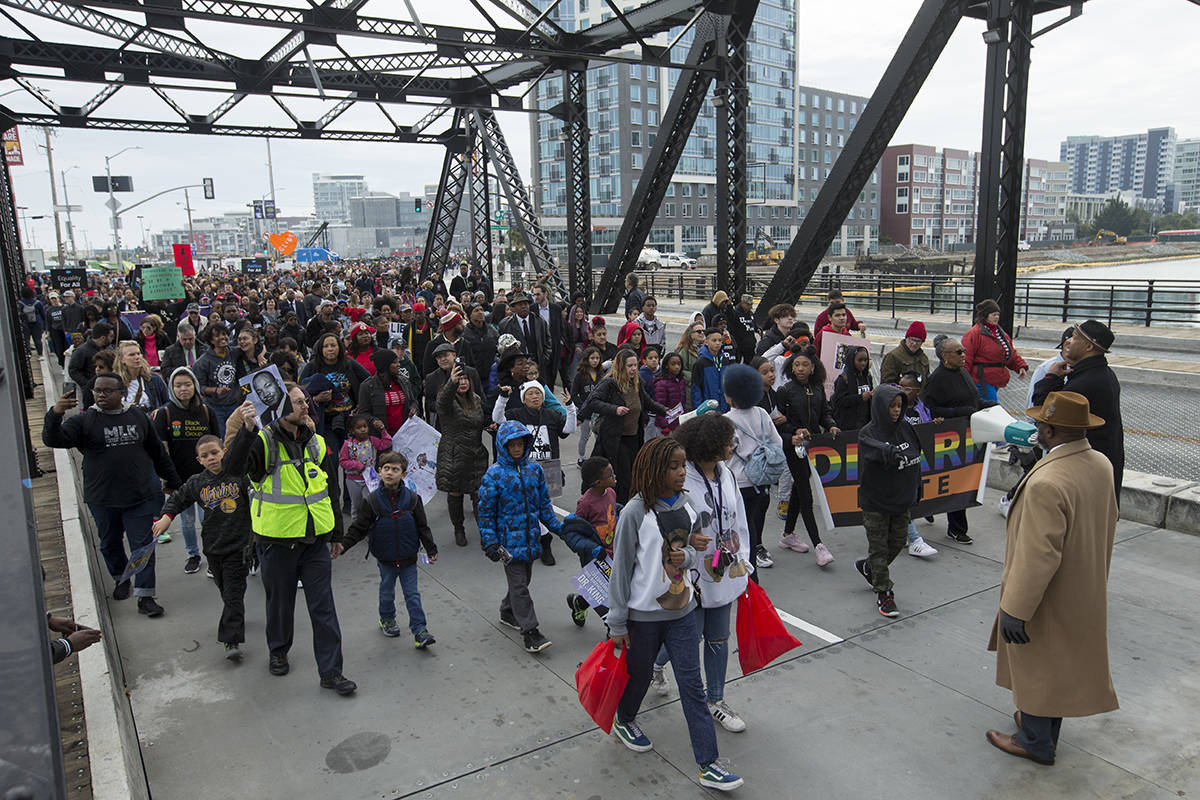 For 17 years the SFIC has organized the City’s annual Rev. Dr. Martin Luther King, Jr. Day observance, including a popular march and interfaith service. The march proceeds from the Caltrain terminal over the Lefty O’Doul Bridge to Yerba Buena Gardens (YBG), bringing together “freedom riders” from the South Bay and others from the wider Bay Area. This march pays tribute to the 1965 crossing made by Dr. King over the Edmund Pettus Bridge in Selma, Alabama. Once at the Martin Luther King, Jr. Memorial at YBG, a large crowd participates in the outdoor interfaith service organized by the SFIC to celebrate Dr. King’s legacy. Key religious and civic leaders address the attendees. The 2026 observance “Liberty, Justice and Beloved Community” was held on Monday, January 19, 2026. Link to the program here.
The Vigil: Interfaith Annual Homeless Persons Memorial
Every December, collaborating with the SF Night Ministry, the SFIC hosts the “The Vigil: Interfaith Annual Homeless Persons Memorial.” Religious leaders of different faiths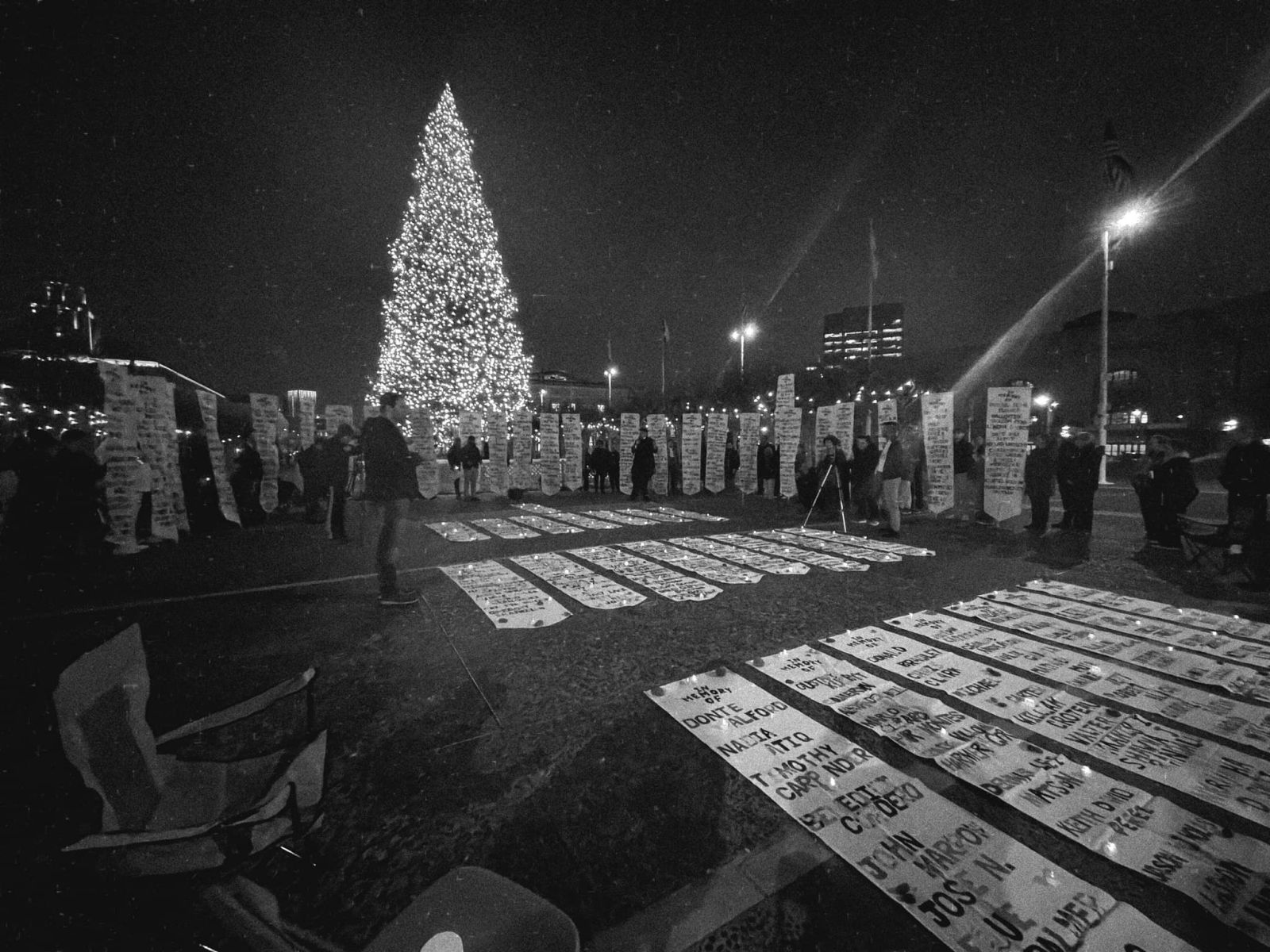 offer prayers for the homeless who have died during the past year, and their names are read. This year’s memorial service took place on Thursday evening, December 18, 2025 at Civic Center Plaza. The service was live streamed.
Annual Interfaith Thanksgiving Prayer Breakfast 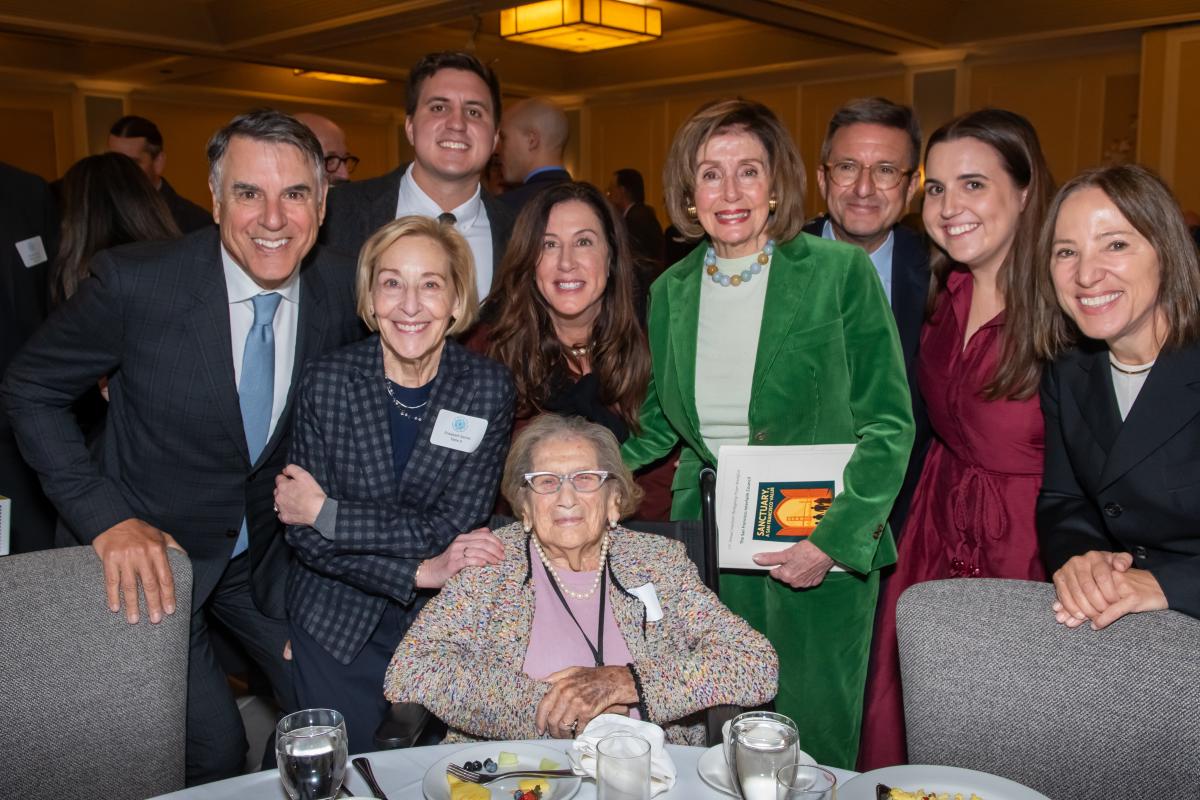
Our major event of the year is the SFIC Annual Interfaith Thanksgiving Prayer Breakfast, attended by over 300 people on the Tuesday before Thanksgiving. Each year we shine the spotlight on a significant contribution made by the faith community to San Francisco. This year's Prayer Breakfast was held on Tuesday, November 25, 2025. This year's theme was "Sanctuary, A San Francisco Value." Link to program and program booklet.
Convener of Faith-Based Social Service Agencies (“CEO Round Table”)
For the past 18 years, the SFIC has regularly convened the leaders of the 20 major faith-based agencies to provide 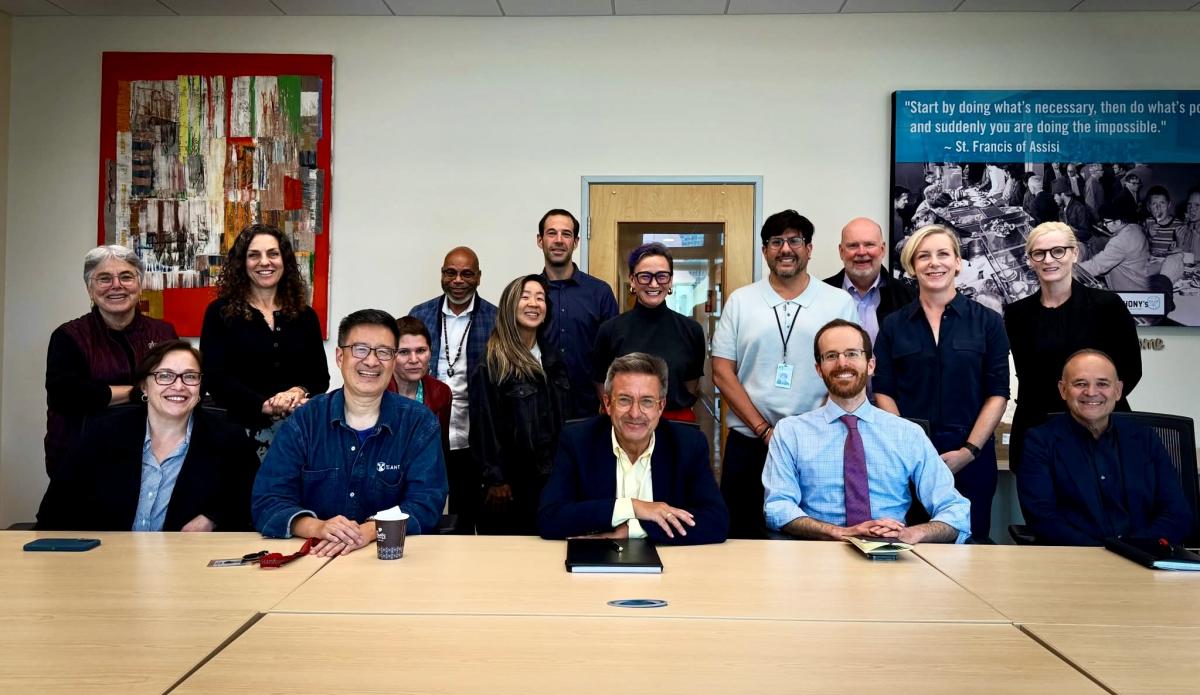 a forum to address issues of common concern. The SFIC promotes the agencies’ collective impact and advocates on their behalf to increase the visibility of the economic challenges faced by non-profits and their clients. Since 2009 the CEO Round Table has responded with a significant unified voice to issues ranging from dramatic budget cuts and their impact on programs and staff, to San Francisco’s affordability crisis that prompted the displacement of numerous constituent agencies. Additionally, the focus is being placed on the attraction and retention of staff in light of shrinking availability and soaring housing costs. As well, the Round Table is developing a strategic response to the significant shift in federal policy priorities and the threat of funding cuts. None of this work could be accomplished by any single agency. Its continued impact has established the CEO Round Table as a major stakeholder at policy-making tables. For a list of the faith-based agencies, please visit: http://www.sfinterfaithcouncil.org/social-service-agencies
Interfaith Prayer Service for Mayor Daniel L. Lurie
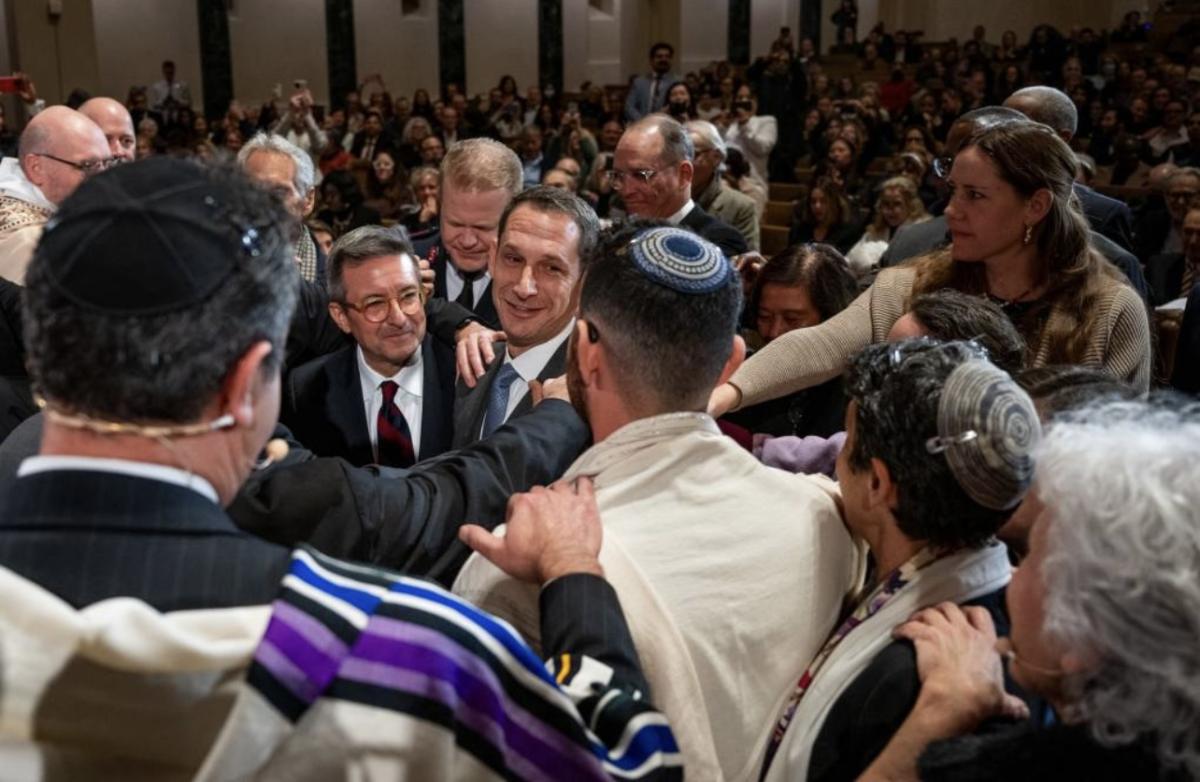 On Tuesday, January 7, 2025, the SFIC and Congregation Emanu-El co-sponsored an Interfaith Prayer Service for Mayor Daniel L. Lurie at Congregation Emanu-El with many diverse communities of faith participating. Link to email invitation:
https://conta.cc/40enJli Program may be viewed here.
2022 JCRC Multi-Faith Freedom Seder / Ramadan Interfaith Iftar Dinner
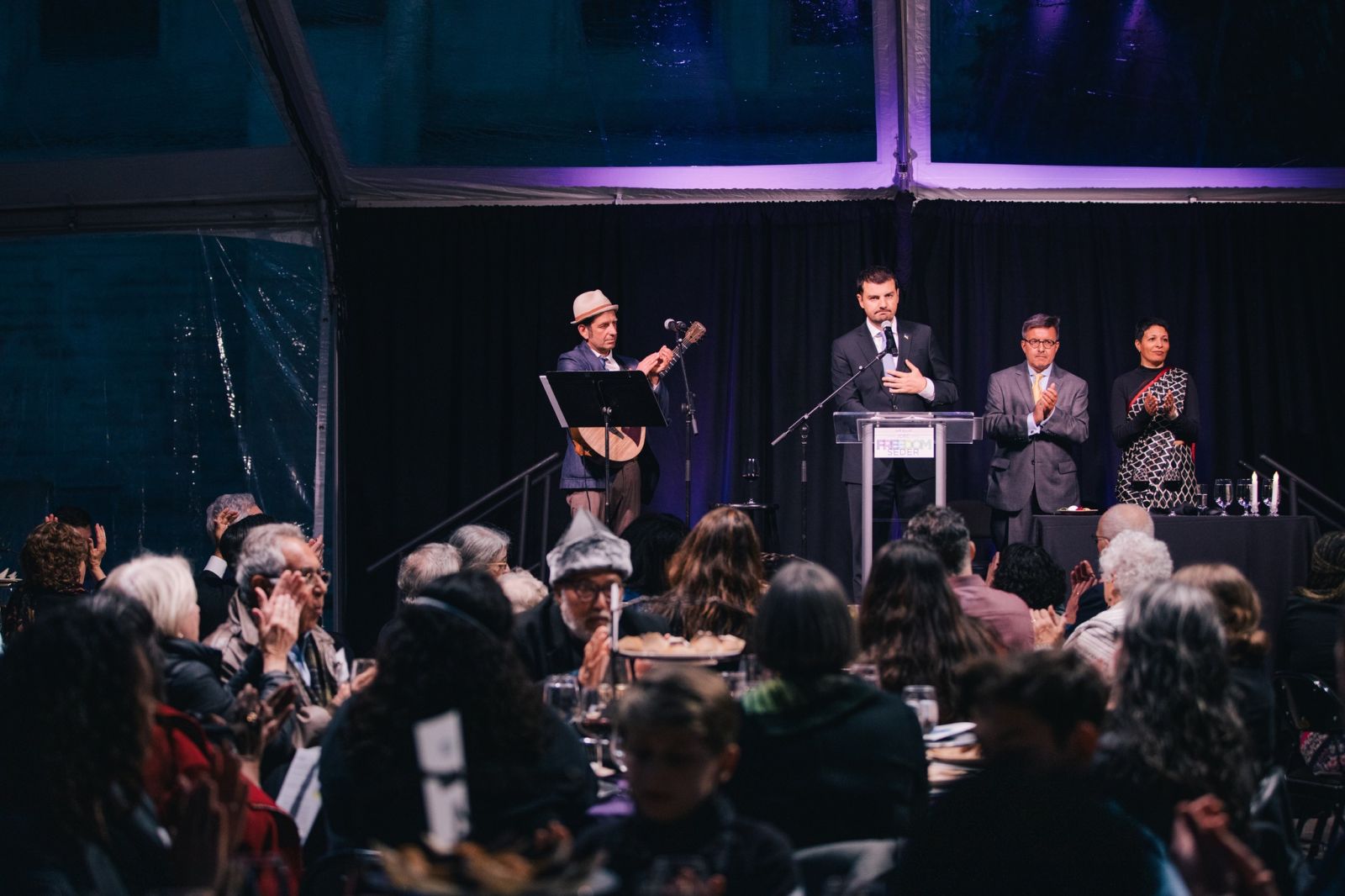 The Jewish Community Relations Council’s (JCRC) annual Multifaith Freedom Seder, has brought people from various faiths and cultures together for 26 years. It was an opportunity to build bonds and strengthen allyship among the Bay Area’s diverse communities. More than 200 people came together for the first time since 2019 at Grace Cathedral under an outdoor tent and on Zoom for a social justice and human-rights focused Passover seder, including Dmytro Kushneruk, the San Francisco-based Consul General of Ukraine. At the seder, faith leaders, government officials, activists and foreign dignitaries were asked to participate in the retelling of the Passover story and how it connects to contemporary issues. The SFIC co-sponsored this event and SFIC Executive Director Michael Pappas served as Co-Emcee.
Ramadan: The Month of Revelation, Gratitude and Community, was observed with an Iftar Dinner, hosted by the Pacifica Institute, at sunset on April 21, 2022, also at Grace Cathedral. Recognizing the confluence of Muslim, Christian & Jewish holy observances, this interfaith coming together around a common table lifted up the Muslim virtues of prayer, fasting and charitable works, with peace as the overarching theme. The SFIC was a co-sponsor of this event and SFIC Executive Director Michael Pappas was invited to offer a prayer for peace. Link to email blast here.
Sanctuary and the SFIC's Local Response to Federal Immigration Threats
By definition, sanctuary is a place of refuge, a place of safety. In our religious world, it is interchangeable with the sacred space in which we gather to worship, a holy place where all of God's children should feel safe, protected, and valued. Throughout the ages, those fleeing persecution sought refuge in these sacred spaces. In the 1980s, something called the Sanctuary Movement emerged, a movement naturally led by people of faith to provide asylum, refuge and support for Central American refugees fleeing political persecution. Sanctuary was recognized as such a noble cause that cities like San Francisco legally enshrined its spirit in legislation that prohibits the use of taxpayer dollars, civil employees, and local law enforcement from aiding and abetting federal Immigration and Customs Enforcement agents from violating that sacred trust. And in 2017, those protections were extended to the whole of the state of California
Sanctuary is a sacred word, a sacred call particularly entrusted to the stewardship of people of faith, and people of faith have and are rising up to respond to exhaustive attempts to diminish, manipulate, demonize, and redefine it. In response, communities of all expressions of faith are speaking up, protesting, standing in solidarity, accompanying, and in their rich tradition, giving sanctuary to our undocumented siblings.
In its response, on behalf of our City's 800 communities of faith and religious institutions, the San Francisco Interfaith Council (SFIC) is party to two significant lawsuits. In the first case, the SFIC has submitted an amicus brief in the City's case challenging the administration's threat to withhold funds from San Francisco because of its Sanctuary City status. Here, the SFIC has raised its voice on behalf of its constituent faith-based social service agencies that contract with the City to provide essential services to San Francisco's most vulnerable residents, as this litigation would put that critical funding in jeopardy. In the second case, the SFIC is one of six prominent religious and labor-related plaintiffs, nationwide, challenging the Trump administration's rescission of the "sensitive locations" policy, which historically prohibits Immigration and Customs Enforcement agents from entering houses of worship, hospitals, schools and affiliated social service agencies for the purpose of apprehending, detaining and deporting undocumented residents. The significant impact and harm caused by this policy rescission has resulted in amplified fear of good and faithful people to publicly express their faith and attend worship services, receive needed medical treatment, attend classroom education and receive social services critical to their very existence. Related to this last concern, the SFIC is partnering with the San Francisco-Marin Food Bank to expand its food delivery program to undocumented siblings now fearful to stand in the lines of our congregations that host food pantries. Additionally, the SFIC has stepped up to collaborate with the San Francisco Office of Civic Engagement and Immigrant Affairs to dispatch important, credible and time-sensitive immigrant rights resources to its vast network of 5,600 e-subscribers and the leadership of its 800 constituent communities of faith and religious institutions. Most recently, the SFIC re-activated its Immigration Defense Fund, an emergency response instrument created in the first Trump administration, that will allow the SFIC to actively engage in fundraising to support The San Francisco Foundation's Stand Together Bay Area Fund, which is providing critical monies to community led organizations directly responding to the needs of our undocumented sisters and brothers at this fragile time.
Interfaith Essential Housing Initiative
California's mandate that San Francisco create 82,000 new units of housing by 2031 has accelerated the need for all sectors to do their part to meet this daunting challenge. San Francisco houses of worship are sitting on some of the most valuable and underutilized parcels in the City. A movement begun in 2016 with the creation of the Interfaith Essential Housing Task Force, coupled by the successful passage of SB4 (YES IN GOD'S BACKYARD), which is designed to streamline and fast-track development of affordable housing on religious owned lands, has positioned our City's religious sector to strategically move the needle and help the City achieve its ambitious commitment. Thanks to generous capacity building grants from the Crankstart and San Francisco Foundations, the SFIC and its collaborating partner DCG Strategies are diligently collaborating to identify, counsel, support, provide feasibility studies and pre-development dollars to faith-based real estate holders, with the stated goal of navigating 400 new units of housing into the City's pipeline over the next two years.
US State Department International Visitors Program Delegation Visits
The SFIC regularly hosts visiting delegations from across the globe at the Presidio Chapel organized by the US State Department International Visitors Program. Recently, the SFIC has hosted delegations from Belgium, Bulgaria, Finland, France, Germany, Malaysia, Malta, Norway, Pakistan, Poland, Republic of North Macedonia, Spain, Sweden and the United Kingdom.
SFIC in the News
Explore articles and other media related to the SFIC here.
Broad Civic Engagement
Because of the important stakeholder role the SFIC plays in many arenas, the SFIC has been invited to take a place at many tables. Most recently, SFIC Executive Director Michael Pappas served on the San Francisco Economic Recovery Task Force, the 2020 Complete Count Census Committee, the SF Disaster Council, and The San Francisco Foundation/FAITHS Leadership Council. He previously served on the SF Human Rights Commission, SF Aging & Adult Services Commission and was designated as its representative to the In-Home Supportive Services Public Authority Governing Body. Additionally, he was selected to participate on the Aspen Institute's cohort on religious pluralism and multifaith engagement, and also serves on a number of nonprofit boards and advisory committees.
The accomplishments listed above are the work of two full-time staff, an active Board of Directors, and dedicated volunteers. We gratefully acknowledge the funding provided by congregations, judicatories, agencies, individuals, and foundations which make these achievements and others not listed here possible.